


Key Takeaways
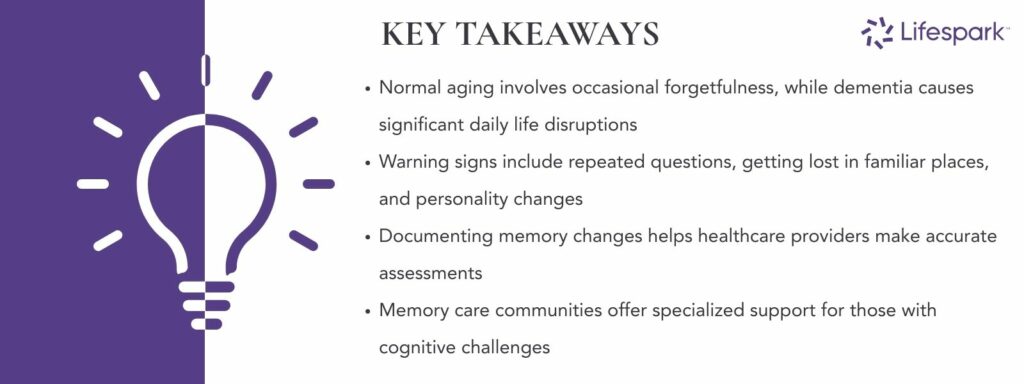
- Normal aging can involve occasional forgetfulness, while dementia can impact memory and thinking to cause significant daily life disruptions
- Warning signs include repeated questions, getting lost in familiar places, and personality changes or unsafe behaviors
- Documenting memory changes and unsafe behaviors can help healthcare providers make accurate assessments
- Memory care communities offer specialized support and enriching programming to help older adults with cognitive challenges
Know the Difference Between Normal Aging and Serious Memory Issues
You might worry every time you forget where you put your keys or struggle to remember a neighbor’s name. These moments can feel scary for families watching an older loved one change, especially when you wonder if they signal something more serious than normal aging.
Occasional memory lapses are often part of healthy aging. More significant cognitive changes, such as dementia, typically involve consistent patterns that disrupt daily life.
Understanding the difference can help you and your loved one know when to seek medical guidance and when to accept that your loved one’s brain works a little differently than it used to.
Carver Ridge Senior Living can support families as they navigate these important distinctions with compassionate guidance and memory care services.
What Do Normal Age-Related Memory Changes Look Like?
The brain naturally changes as you age, just like the rest of your body.
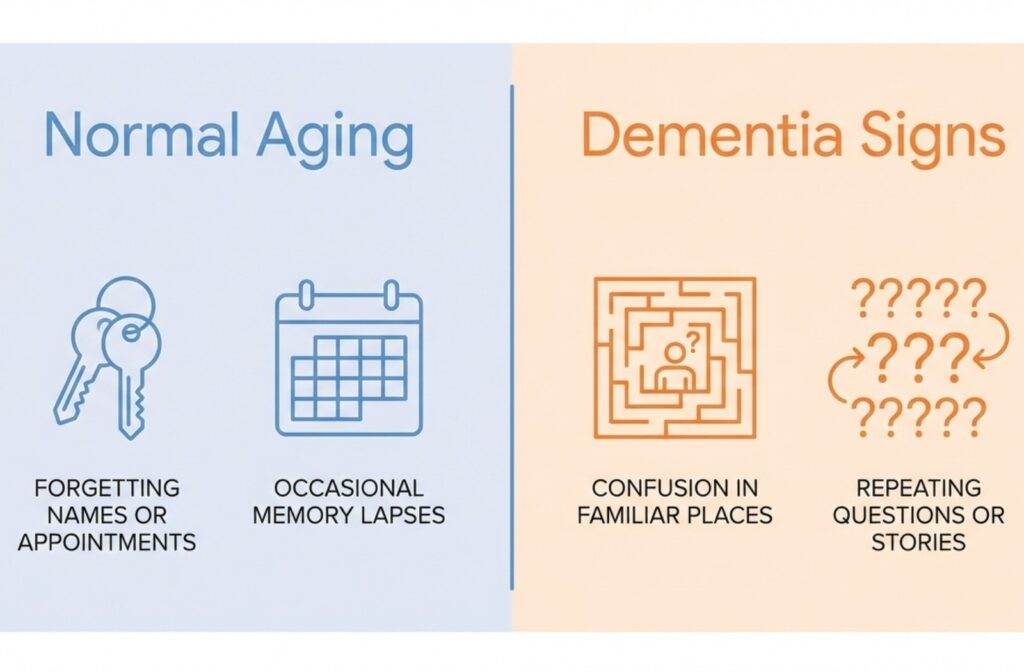
Your loved one might occasionally forget someone’s name at a social gathering, then remember it later in the conversation. Or your loved one could walk into a room and momentarily forget why they came in there.
Processing information may take a bit longer than it used to.
Your loved one might need an extra moment to recall the right word during a conversation or find themselves reading instructions twice before starting a new task. Learning new technology can feel more challenging, requiring more practice than before.
These changes happen gradually and don’t significantly impact your loved one’s ability to live independently. They can still manage your finances, drive familiar routes, and maintain relationships without major difficulties.
When Memory Changes Signal Something More Serious
Daily Life Disruptions
Dementia can affect your ability to handle routine tasks that were once automatic. Your loved one might ask the same question multiple times within a short period, forgetting that they already received an answer. New information doesn’t stick in their memory the way it used to.
Getting lost in places your loved one has visited many times before becomes a genuine concern. They could forget how to get home from the grocery store they’ve shopped at for years.
Managing money becomes confusing: bills might go unpaid, or your loved one could make the same payment twice without realizing it. These warning signs can indicate when memory changes go beyond normal aging.
Behavioral and Personality Shifts
You might notice your loved one experiences increased confusion during everyday situations that never bothered them before. Simple decisions can feel overwhelming and lead to frustration or agitation, like choosing what to wear or what to eat for lunch.
Social activities your loved one once enjoyed may start feeling uncomfortable or confusing. Your loved one might withdraw from book clubs, card games, or family gatherings because it becomes difficult to follow conversations.
Your loved one’s judgment in everyday situations may change, leading to decisions that seem out of character. Understanding what dementia involves can help families recognize the signs of cognitive changes.
How to Track and Document Memory Changes
Keeping a simple notebook can help you identify patterns in memory changes.
Write down specific incidents with dates, like when your loved one forgets a doctor’s appointment or gets confused about medication timing. The information becomes valuable when discussing concerns with your loved one or healthcare providers.
Pay attention to how often these incidents occur and whether they’re getting more frequent or severe. Note if certain times of day seem worse, or if particular situations trigger more confusion.
Ask other family members to share their observations, as they might notice changes you don’t see in yourself.
Include details about how these changes affect daily activities. Can your loved one still cook safely? Does your loved one feel comfortable driving? Is your loved one managing household tasks without help?
These specifics help paint a clearer picture of your overall functioning. Assessing care needs and supporting your loved one’s comfort becomes easier with documented patterns.
Take the Next Steps Forward
When memory changes start interfering with your daily life, scheduling a medical evaluation can provide clarity and peace of mind. Healthcare providers can conduct assessments to determine whether changes fall within normal aging or require further attention.
Gather information about your family’s medical history before your appointment. Knowing whether parents or siblings experienced memory issues can help healthcare providers understand your risk factors.
Bring your documented observations and any medications your loved one is currently taking.
Research supportive care options in your area, including memory care communities. Having information about available resources helps you make informed decisions about your future care needs, whether you need support now or want to plan ahead.
Knowing when professional memory care is necessary and what it can offer your loved one can guide your planning.
How Carver Ridge Provides Specialized Memory Care Support
Memory care communities like Carver Ridge create structured daily routines that reduce confusion and help residents feel more secure. Consistent schedules for meals, activities, and personal care provide a framework that supports cognitive function and reduces anxiety.
The compassionate staff members receive specialized training to understand memory challenges and respond with patience and kindness. They know how to communicate effectively with residents experiencing cognitive changes and can adapt their approach to each person’s needs.
We’ve designed Carver Ridge thoughtfully with safety and cognitive needs in mind. Clear pathways, familiar spaces, and engaging activities help residents navigate their surroundings more easily and maintain their sense of independence within a supportive community.
Schedule a tour today to explore how our community can support you and your loved one.