


Key Takeaways
- Safety concerns, confusion, and caregiver strain are signs that memory care may be the right next step
- Waiting too long can increase health risks and make transitions emotionally harder
- Memory care can offer structured routines, personalized support, and meaningful daily connection
- Having an early, loving conversation gives your family more time, more control, and more options
- Touring a community together can help ease the transition for everyone involved and connect you with resources
When the Right Time Becomes Now
Watching someone you love change is one of the hardest things a family can go through. You want to keep them close, keep things familiar, and protect them from anything that feels like loss.
That instinct comes from a beautiful place, but sometimes holding on a little too long can quietly make things harder for everyone.
Knowing when to consider memory care is not about giving up on your loved one. It’s about choosing something meaningfully supportive for them.
A community can offer safety, routine, and genuine connection that’s difficult to recreate at home. The earlier you start exploring, the more choices your family will have. Finding the right level of care is one of the most loving things you can do.
Signs That Memory Care May Be the Right Next Step
Changes in Daily Safety and Awareness
Some of the clearest signals show up in day-to-day life.
If your loved one is wandering, getting confused about where they are, or experiencing frequent falls at home, those are moments worth paying close attention to. These situations can escalate quickly, and the home environment isn’t always set up to handle them safely.
Forgetting medications, skipping meals, or losing track of basic routines are telling signs. When someone can no longer reliably manage their own daily rhythm, the risk of something going wrong grows with each passing day.
Difficulty recognizing familiar faces or once-familiar places is another sign that the level of support needed has changed.
Caregiver Strain Is a Signal Too
If you’re the one providing care, your well-being matters deeply here. Exhaustion, stress, and the feeling that you’re never quite doing enough are things many caregivers quietly carry for far too long.
Over time, that weight can affect your health, your relationships, and your ability to be present for the person you love. Learning to recognize symptoms of caregiver stress is an important first step.
When care needs outgrow what home life can realistically support, that’s not a failure. That’s a family making a thoughtful, loving decision. Caregiver burnout is more common than you might think, and support is available to help you and your loved one.
What Happens When the Move Is Delayed Too Long
It’s easy to tell yourself things are fine a little longer. But delaying the move to memory care can quietly increase risks at home, from safety incidents to missed medications to increased isolation.
The longer a person with memory loss goes without consistent, specialized support, the more those gaps can affect their overall health and happiness.
Late transitions can also be harder emotionally. Moving someone into a new environment after a health crisis or a significant decline often means they have less capacity to adjust and settle in comfortably.
Acting earlier, while your loved one still has more awareness and adaptability, can make the whole experience gentler for them and for you. There are ways to help make that transition smoother when the time comes.
Caregiver burnout doesn’t just affect the caregiver. It ripples through the whole family. Children, siblings, spouses, everyone close feels the weight when one person has been carrying too much for too long. Social isolation can quietly deepen for your loved one during this time as well.
What Memory Care Actually Looks Like Day to Day
A Structured, Supportive Routine
One of the most comforting things about memory care is the consistency. A predictable daily schedule helps reduce confusion and anxiety, giving residents a sense of stability they can count on.
Rather than a one-size-fits-all approach, personalized care plans are built around each person’s individual needs, personality, and history. You can explore what a typical month of memory care activities looks like to get a real sense of daily life.
That kind of thoughtful attention makes a real difference. When your loved one knows what to expect each morning, from when they wake up to when they share a meal, it creates a sense of calm and comfort.
Connection, Purpose, and Belonging
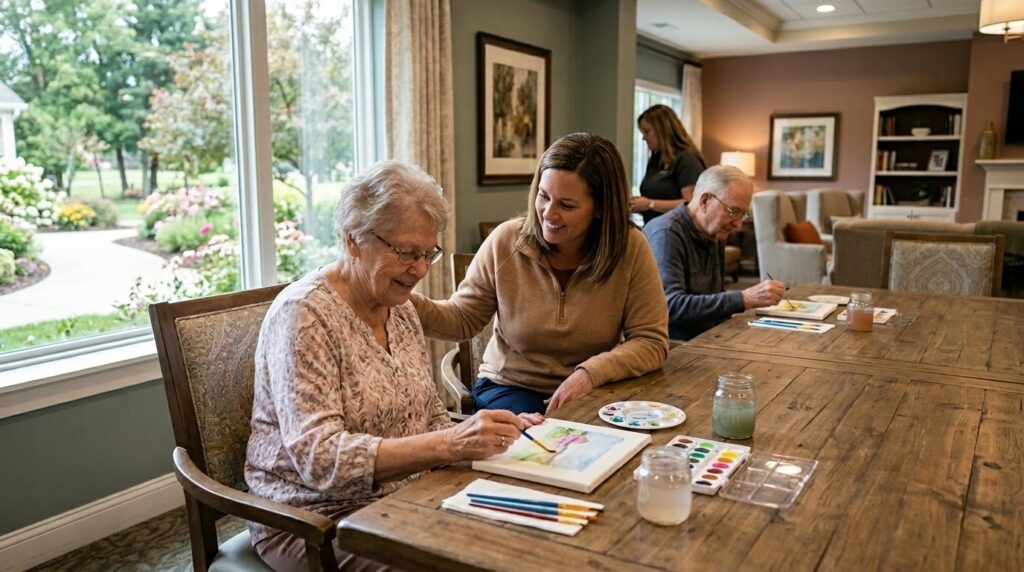
Memory care communities are designed with meaningful engagement in mind. Activities are thoughtfully created for residents at every stage, offering moments of joy, creativity, and connection.
It’s not about keeping busy. It’s about helping each person feel seen, valued, and part of something. Meaningful activities can genuinely support well-being at every stage, such as performing arts, music, and social hobbies.
Social connection with peers in a warm, familiar setting can genuinely lift a person’s spirit. Friendships form, laughter happens, and residents often find a sense of belonging that can be hard to find in isolation at home.
How to Have the Conversation with Your Loved One
Starting this conversation doesn’t have to feel like delivering bad news. Lead with love, not urgency. Share what you’ve noticed, and frame it around their comfort, their safety, and the quality of life you want for them. Avoid making them feel like a decision is being made for them.
Whenever possible, involve them in the process. Visiting a community together, asking questions side by side, and letting them share their own thoughts can turn a hard conversation into a shared step forward.
Knowing what to look for in a senior living community can help guide those conversations in a meaningful way.
Take the Next Step at Carver Ridge Senior Living
You don’t have to have everything figured out before you reach out. Touring a memory care community together can answer questions you didn’t even know you had, and it often eases the anxiety that comes with the unknown.
Some good questions to ask during a visit include how care plans are personalized, what a typical day looks like, and how the team supports families through the transition.
Taking a look at available floorplans and community spaces can also help make things feel more real and less overwhelming.
Reaching out early gives your family time, options, and peace of mind. Visit us at Carver Ridge Senior Living. Our team is here to walk alongside you every step of the way.